
Review: Quantum Break
They should have done back in time and made a better game. Or maybe not.

To prepare for this year’s release of Remedy’s Control Resonant, I set myself the ridiculous goal of playing through Remedy’s back catalog: the two Max Payne games, the two Alan Wake games and their DLC, the original Control and its DLCs, and, finally, Remedy’s most forgotten title: Quantum Break. It was a dumb plan, because there is almost no chance I will finish everything in time. But dammit, I’m trying.
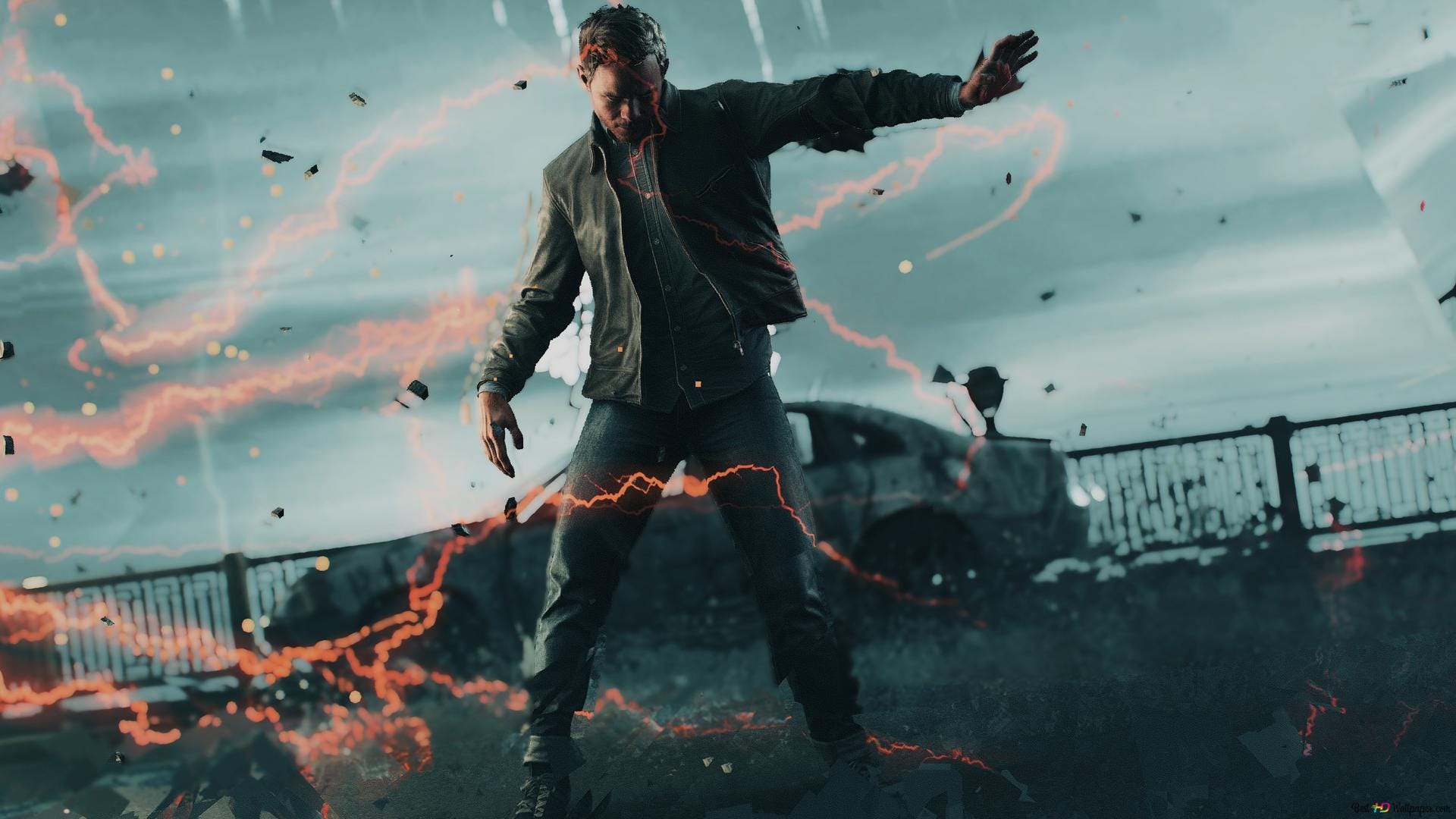
First revealed in 2013 ahead of the Xbox One launch, Quantum Break was pitched as a bold hybrid of Remedy’s high-octane action & cinematic storytelling mixed into Microsoft’s push into living-room entertainment, complete with a built-in television show. It was… a lot. After several delays and the Xbox One’s messy rollout, the game finally arrived in 2016 to a largely confused, lukewarm response. Quantum Break is not great, but I still think about it often. It offers something genuinely distinct, even when that uniqueness does not always work in its favor.
You play as Jack Joyce, a drifter pulled into a time-bending adventure after his old friend Paul Serene recruits him to help test a time machine designed by Jack’s brother, Will. Naturally, things spiral: the machine is stolen by a shady corporation secretly controlled by an alternate version of Paul. Dun dun daaaa. Jack also gains time-manipulation powers, because the game needs a gameplay gimmick. The premise leads to some standout action sequences, with environments and enemies that speed up, slow down, and occasionally reverse time, while firefights mix traditional over-the-shoulder shooting with Jack’s powers for a fast, energetic feel.
On my first playthrough years ago, I never quite found the right rhythm for the combat. I treated Quantum Break like a traditional cover shooter that is closer to Gears of War or Mass Effect by playing cautiously, staying behind cover, and attacking only when it felt safe. That approach is both ineffective and dull here. You die quickly, and most weapons are unreliable at long range. This time, though, the game clicked in a way that feels closer to the 2016 Doom reboot than to Gears. It is at its best when played aggressively: charging into fights with time powers, shooting up close, then using enhanced mobility to make quick escapes. The novelty eventually wears thin, but the core of Quantum Break remains a blast to play.
However, that is not why I frequently think about Quantum Break. Why I think about Quantum Break is its ambitious and occasionally baffling storytelling choices, and, you know, that TV show I mentioned. The game is broken into Acts and each Act is then bookended by a 30-minute episode of the Quantum Break TV show. I cannot explain why Remedy decided to make a TV show in their video game, other than the studio’s affinity for live-action, which was lightly featured in the Max Payne games, and Microsoft’s push into entertainment with the Xbox One.
For those who don’t remember, the core idea behind the Xbox One was that it would be your all-in-one device for television-based entertainment. You could plug in your cable box into the Xbox One and the console would act as a conduit for seamlessly watching TV, playing games, doing both at the same time via split-screen, and communicating with loved ones via the Kinect camera. The Xbox One was a device that was targeted squarely at Boomer men who still had cable boxes and wanted to watch TV while playing Call of Duty. Mind you, this was the era in which streaming on YouTube, Netflix, and Hulu was starting to take over and traditional TV was on the decline. The Xbox One was a console, ultimately, for nobody, and yet, Quantum Break fit right in by combining gaming with television.
The show itself is aggressively fine, landing slightly below the average CBS primetime drama of the era. Add a generous dose of Microsoft product placement with the newly-released Windows 10 and Windows Phones appearing constantly, and the result is competent but forgettable. The cinematography is flat, with dialogue scenes relying on standard shot/reverse-shot setups, while action scenes lean on shaky camera work and tight close-ups to disguise the rough edges. If you have seen NCIS or Criminal Minds, you know the drill. The show’s one notable choice is its perspective: it follows the game’s main villain, Monarch Industries, and its leader, Paul. It is a clever idea, but the show has two major drawbacks. First, much of the plotting and character motivation falls back on familiar genre clichés. Several characters question their roles as villains, including one with a pregnant wife who simply wants to look like a good man to his loved ones. Yawn. Second, Paul’s motivations feel muddled because the game gives you limited control over them. At the end of each Act, before the show’s episode plays, you briefly control Paul, hear his internal monologue, and make choices that shape parts of the story. This leads to an awkward amount of role-play reversal. Should I make choices that make sense from Paul’s perspective, or should I make choices from the perspective of Jack and make decisions that would make my journey easier? I never really got a right feel of what the ‘right’ choice was supposed to be and therefore the story feels a little undirected.

By the time I finished Quantum Break, I was left with deeply mixed feelings. On one hand, the mechanics are genuinely fun, and several set pieces are excellent. On the other, the story and structure holding those moments together never quite cohere. It is easy to see how the final product was pulled in too many directions by too many competing interests. Still, I’m glad I played it. Maybe I’m just a sucker for flawed art, but there is something fascinating about watching so much money get poured into an idea that was clearly doomed to be messy. In an era when games are often polished to a mirror sheen, it is refreshing to play something that takes such big swings, even when it misses badly. Sometimes, that makes it more fun, and isn’t that what gaming is supposed to be about?